Ceiling fan installation height
Last updated: 17 Oct 2025
4826 Views
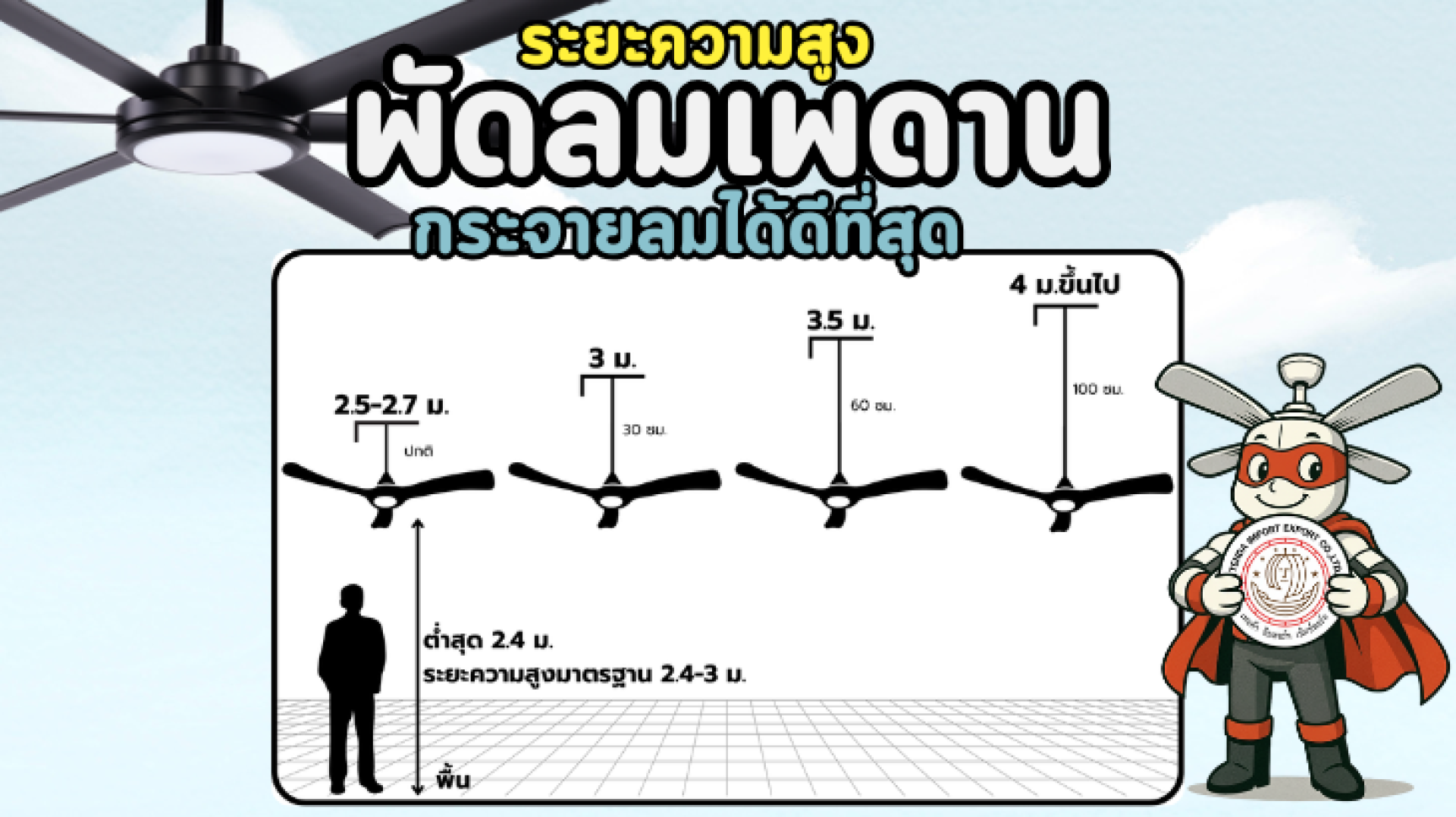
Why is ceiling height important for ceiling fans? A detailed and practical explanation.
Brief summary:
Installing a fan with the blades at the appropriate height (not too high or too low) will ensure the most efficient air circulation, cooling the entire room, saving energy, and ensuring safe operation.
1) Basic Principles: Why does height matter?
Ceiling fans work by pushing air into layers (air circulation). If the blades are too high, the air will not reach the work area. If they are too low, they will create a wind-shock zone and may be unsafe for pedestrians.
The appropriate height allows for air mixing between the upper and lower floors, resulting in a more even room temperature and reducing energy consumption (reducing air conditioning and fan usage).
2) Recommended height based on ceiling height (As provided)
Ceiling height: 2.5m x 2.7m. Install in a standard flush mount or short downrod to bring the blades close to standard level.
Ceiling height: 3.0m. Use a 30cm (0.30m) long downrod.
Example: Ceiling height: 3.00m. Subtract the 0.30m extension rod. The blades will be approximately 2.70m from the floor (approximate).
Ceiling height: 3.5m. Use a 60cm (0.60m) extension rod.
Example: 3.50 x 0.60 = 2.90m (approximate blade height from the floor).
Ceiling height: 4.0m and above. Use a 100cm (1.00m) extension rod.
Example: 4.00 x 1.00 = 3.00m (approximate blade height from the floor).
Standard height: 2.43m Ceiling fans are best positioned at 2.30 m from the floor for optimal airflow (this blade position from the floor provides smooth, even coverage).
Note: The above estimates do not include the height of the motor assembly/canopy, which may lower the actual position slightly. The installer will calculate the appropriate height for each model.
3) Safety Distances to Consider
The minimum distance from the floor to the blade surface should be at least 2.30 m for safety when people walk by.
If installing above areas where people frequently stand and walk (such as stairs or walkways), increase the distance for increased safety.
4) Advantages of Proper Installation
More even airflow, providing a cool, comfortable feeling even from across the room
Energy savings, eliminating the need to frequently rev the fan or air conditioner
Reduces vibration and noise from incorrect installation
User safety (no head impacts, no risk of blade impacts)
5) Other factors to consider along with height
Room Size (Area): Large rooms require appropriate blade sizes or multiple fans. Installation Style (Flush vs. Downrod): Low ceilings use flush or short downrods / High ceilings use long downrods.
Distance from wall: The fan blades should be sufficiently far from the wall (to prevent wall-mounted air circulation).
Motor (DC or AC) and CFM specifications affect actual airflow. Measure the CFM; the higher the value, the more airflow.
Special applications, such as built-in lighting or damp areas (select moisture-proof materials).
6) Pre-Installation Checklist (Have your technician inspect it).
Measure the actual ceiling height from the floor to the installation point.
Select the downrod length based on the height so that the blade plane is close to 2.42.9 m (the target is 2.43 m).
Check for a minimum clearance of 2.30 m from the floor to the fan blades.
Consider the room size to select the fan blade size or number of fans.
Check whether the ceiling structure can support the weight and vibration. Center the installation location in the center of the main work area.
7) Real-world example (short)
For a 3.0 m ceiling, a 30 cm downrod is recommended. The fan blades will be approximately 2.70 m from the floor for even cooling, suitable for a typical bedroom/living room.
For a 4.0 m ceiling, a 100 cm downrod is recommended. The fan blades will be approximately 3.00 m from the floor. If you want a closer distance of 2.43 m, you may need to use a shorter downrod or choose a fan with a higher canopy/motor assembly.
Brief summary:
Installing a fan with the blades at the appropriate height (not too high or too low) will ensure the most efficient air circulation, cooling the entire room, saving energy, and ensuring safe operation.
1) Basic Principles: Why does height matter?
Ceiling fans work by pushing air into layers (air circulation). If the blades are too high, the air will not reach the work area. If they are too low, they will create a wind-shock zone and may be unsafe for pedestrians.
The appropriate height allows for air mixing between the upper and lower floors, resulting in a more even room temperature and reducing energy consumption (reducing air conditioning and fan usage).
2) Recommended height based on ceiling height (As provided)
Ceiling height: 2.5m x 2.7m. Install in a standard flush mount or short downrod to bring the blades close to standard level.
Ceiling height: 3.0m. Use a 30cm (0.30m) long downrod.
Example: Ceiling height: 3.00m. Subtract the 0.30m extension rod. The blades will be approximately 2.70m from the floor (approximate).
Ceiling height: 3.5m. Use a 60cm (0.60m) extension rod.
Example: 3.50 x 0.60 = 2.90m (approximate blade height from the floor).
Ceiling height: 4.0m and above. Use a 100cm (1.00m) extension rod.
Example: 4.00 x 1.00 = 3.00m (approximate blade height from the floor).
Standard height: 2.43m Ceiling fans are best positioned at 2.30 m from the floor for optimal airflow (this blade position from the floor provides smooth, even coverage).
Note: The above estimates do not include the height of the motor assembly/canopy, which may lower the actual position slightly. The installer will calculate the appropriate height for each model.
3) Safety Distances to Consider
The minimum distance from the floor to the blade surface should be at least 2.30 m for safety when people walk by.
If installing above areas where people frequently stand and walk (such as stairs or walkways), increase the distance for increased safety.
4) Advantages of Proper Installation
More even airflow, providing a cool, comfortable feeling even from across the room
Energy savings, eliminating the need to frequently rev the fan or air conditioner
Reduces vibration and noise from incorrect installation
User safety (no head impacts, no risk of blade impacts)
5) Other factors to consider along with height
Room Size (Area): Large rooms require appropriate blade sizes or multiple fans. Installation Style (Flush vs. Downrod): Low ceilings use flush or short downrods / High ceilings use long downrods.
Distance from wall: The fan blades should be sufficiently far from the wall (to prevent wall-mounted air circulation).
Motor (DC or AC) and CFM specifications affect actual airflow. Measure the CFM; the higher the value, the more airflow.
Special applications, such as built-in lighting or damp areas (select moisture-proof materials).
6) Pre-Installation Checklist (Have your technician inspect it).
Measure the actual ceiling height from the floor to the installation point.
Select the downrod length based on the height so that the blade plane is close to 2.42.9 m (the target is 2.43 m).
Check for a minimum clearance of 2.30 m from the floor to the fan blades.
Consider the room size to select the fan blade size or number of fans.
Check whether the ceiling structure can support the weight and vibration. Center the installation location in the center of the main work area.
7) Real-world example (short)
For a 3.0 m ceiling, a 30 cm downrod is recommended. The fan blades will be approximately 2.70 m from the floor for even cooling, suitable for a typical bedroom/living room.
For a 4.0 m ceiling, a 100 cm downrod is recommended. The fan blades will be approximately 3.00 m from the floor. If you want a closer distance of 2.43 m, you may need to use a shorter downrod or choose a fan with a higher canopy/motor assembly.

